
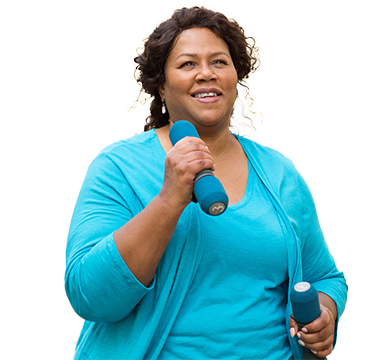
Understand the risks of obesity and learn how making certain lifestyle choices can help you maintain a healthy weight.
Managing your weight is an important part of a healthy lifestyle and can help you prevent and control other diseases and conditions. Many factors can make it difficult to manage your weight and there is no one-size-fits-all solution. However, there are some proven strategies you can try to help you reach your goals.
We’re here to support you and help you understand your weight, health risks, management strategies, and plan benefits.
Obesity is a range on the body mass index (BMI) scale, which is a number based on a person's height and weight. It typically means you have too much excess body fat, increasing your risk for health problems.
You can use the National Institute of Health’s online BMI calculator to determine if your weight is in a healthy range. Standard BMI ranges include:
- Underweight = <18.5
- Normal weight = 18.5–24.9
- Overweight = 25–29.9
- Obesity = BMI of 30 or greater
BMI is not an exact measurement of your health status, but it can provide valuable insight into your overall health. It’s important to remember that while BMI can estimate body fat, it is not a direct measurement of body fat. For example, athletes may have a higher BMI due to muscle mass but are not considered overweight.
When developing your weight management plan, your provider should consider other factors (including age, sex, and ethnicity) and measurements (like waist circumference and body composition) instead of relying solely on your BMI.1
Your weight is influenced by many factors, some of which are controllable and some of which are not.2
Controllable factors you can address through lifestyle changes include:
- Diet
- Exercise
- Sleep
- Stress
Uncontrollable risk factors include:
- Age
- Sex
- Genetics
- Family history
- Medications
- Endocrine diseases, like polycystic ovary syndrome (PCOS) or hypothyroidism
Excess weight causes stress on your joints and organs and your body may also have a harder time pumping blood. These extra demands can lead to more serious health risks, including:
- Cardiovascular disease (heart disease), including Hypertension (high blood pressure)
- Dyslipidemia (high cholesterol)
- Insulin resistance and type 2 diabetes
- Non-alcoholic fatty liver disease
- Pregnancy and fertility problems
- Stroke
- Certain types of cancer
Losing just 3% to 5% of your total weight is enough to start to see positive health changes.3 Here are some small changes you can make to help manage your weight:
- Eat a balanced diet that includes fruits, vegetables, whole grains, fiber, and healthy fats
- Get at least 150 minutes of moderate-intensity aerobic activity per week
- Aim for at least 7 hours of sleep each night
- Prioritize your mental health
- Keep up with your annual preventive care checkups

Many delay or avoid seeing their primary care provider due to fear of shame or embarrassment of their body weight.4 Open communication and regular check-ups with your provider can help you manage your weight and prevent serious conditions.
Understanding Your Benefits & Coverage
- Preventive Care
- Dieticians & Nutritionists
- Weight Loss & Lifestyle Management Program
- Fitness Discounts
- Surgical Treatment
- Weight Loss Medications
Get preventive care screenings for things like obesity, diabetes, and other health conditions during your routine preventive care exam — free when seeing a network provider.
Regularly attending your annual exam helps your primary care provider (PCP) monitor and track your weight and other factors over time. This consistency allows your provider to catch weight gain early so you can take steps to control your weight before it harms your health.
Your PCP can also provide personalized weight management recommendations and counseling.
Connect with a registered dietician who can evaluate your nutritional needs and help you develop a personalized diet and meal plan. You can also get help making healthy food choices and forming healthy eating habits through nutrition counseling.
In-network benefits for Dieticians and Nutritionists:
Standard Option: 30% of the Plan allowance, 4 visits max
High Option: $15 copay, 4 visits max
Medicare Advantage: $0 copay
Beginning in 2027, Standard and High Option members will be able to participate in a Weight Loss & Lifestyle Management program through TrestleTree — at no additional cost.
This program offers comprehensive support to help you reach your weight-loss and healthy-lifestyle goals.
Achieve your personal fitness goals with Active&Fit Direct™. You have access to thousands of free digital workouts and the opportunity to pay a discounted membership rate at participating fitness studios nationwide.
Surgical treatment of morbid obesity (bariatric surgery) is covered under our plans for eligible members. Please review our FEHB Plan Brochure for more information.
Surgery should not be the first step in your weight loss journey. Talk to your provider about your weight loss goals and treatment options.
New 2027 requirement for weight-loss GLP-1 coverage: If you currently use, or are considering using, a GLP-1 medication for weight loss, you will need to participate in the Weight Loss & Lifestyle Management program to receive coverage for your medication.
Prescription anti-obesity medications are Tier 3 drugs under the Standard and High Option plans.
Medicare Advantage members must be enrolled in and actively participating in an Intensive Behavioral Therapy (IBT) program offered as part of your health benefits to continue receiving coverage for GLP-1 weight loss medications.